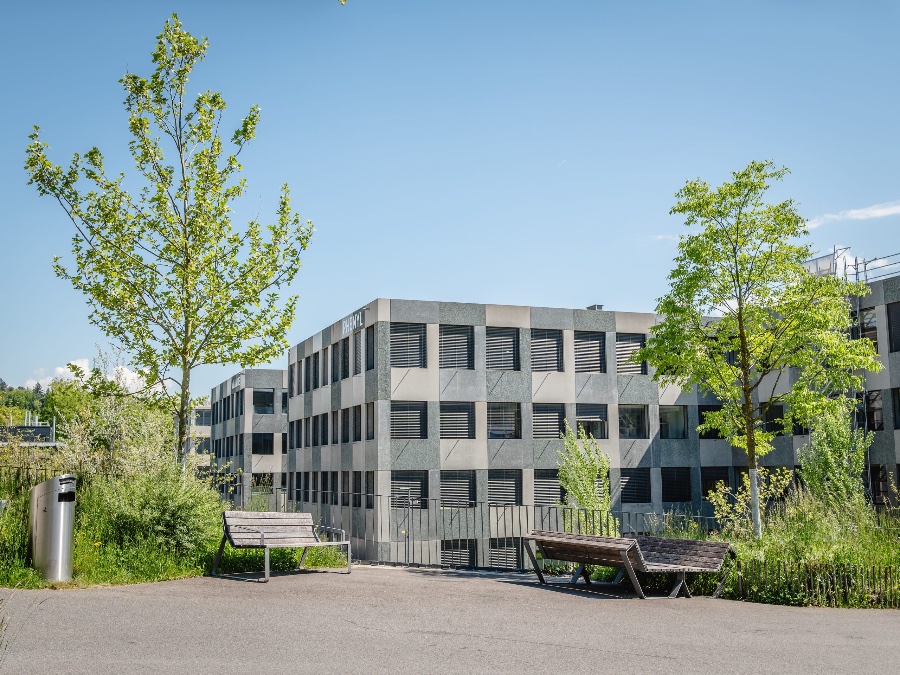
Biopôle, Phenyl Building, Route de la Corniche 3A, 1066 Epalinges, Switzerland
AI-accelerated nutraceutical innovation
Develop the next generation of clinically-proven nutraceuticals.
Siftlink runs AI-accelerated programs to discover novel bioactive applications and compositions towards performance, quality of life and preventing disease across life stages, conditions and needs.
We predict clinical success of bioactives across thousands of endpoints and biomarkers.
One trial met its primary endpoint. One did not. Our model has seen neither result. It picks the one that worked 89 times out of 100.
89out of 100
correct calls on the outcome of clinical trials, based on temporal benchmarking
Correct calls, per 100 head-to-head pairs
Siftlink89
Best published method65
A coin toss50
0100 pairs
ROC-AUC 0.893, 95% CI 0.838 to 0.939. Temporal hold-out: trained on trials reading out before 2020, tested on 2020 and later. Comparison: HINT, Cell Patterns 2022, 0.645.
Our Virtual Cell model connects molecular and clinical data to identify associations between bioactives and clinical endpoints and biomarkers. Point the model at a clinical trial that is already recruiting, or one still on paper, and it predicts whether that trial will meet its primary endpoint, before any result exists. It forecasts only from evidence that was available when the trial began; nothing published afterwards is visible to it.
Model can prioritize clinical endpoints and biomarkers for known bioactives, novel ones or even new structures or bioactives for a given endpoint/biomarker.
Botanical extracts are hard to protect, so the clinical evidence built around a species ends up shared with everyone selling it. Differentiation depends on holding something exclusive, and internal discovery pipelines are thin. Lets work together in developing clinically supported bioactive applications.
For consumer health brands
Category leadership needs an active nobody else can put on a label. Buying a branded ingredient means competing with everyone else who bought it. Join our Precision Innovation sprint to design products and portfolios in 6 weeks.
19programs delivered for multinationals and SMEs
3patents filed
MultipleAI-discoveries confirmed by independent laboratory measurements
Innosuisse Innovation Booster 2023, won for resource efficiency
We explore innovation from single bioactives, to synergistic compositions and to product portfolio lines to address the needs of targeted market segments through well designed proprietary positions.
We run our own discovery programs, while we are looking for partnerships to co-develop towards the market.
The evidence gap
This category makes claims faster than it can substantiate them, and the gap is not evenly distributed. We measured it.
Across 216,350 consumer reports and 13,875 clinical trials mapped onto a shared vocabulary, consumer demand and clinical research point in different directions. Sleep is 39% of consumer discussion and 3% of trials. Skin, hair and ageing, 21% against 5%. Cardiovascular endpoints take 10% of trials and 2% of discussion.
Demand concentrated where evidence is thinnest is where a category leader can still be made. It is also where most entrants fail, because they launch the claim without building the evidence underneath it.
Our programs are selected against that map and built to close the gap rather than to exploit it.
Share of 216,350 consumer comments against share of 13,875 clinical trials, by application area, on a common vocabulary. Bars scaled to a 40% axis. Sorted by gap size.
Data for chart A, percent of corpus
Area
Consumer
Trials
Sleep and insomnia
39.2
3.0
Skin, hair and ageing
21.3
4.8
Anxiety and stress
8.2
5.9
Cardiovascular
1.6
10.1
Pain
1.7
6.3
Mood
1.5
5.6
Metabolic health
Metabolic health is the most contested space in nutraceuticals and the least owned. Most entrants are commodity botanicals with no protectable position, which is why they compete on marketing rather than on mechanism.
A portfolio here spans glycaemic response, satiety, lipid handling and lean mass on one claim architecture, so the evidence built for one composition supports the others and the filings overlap rather than standing alone.
Run conventionally, four endpoints mean four evidence bases and four filings. On one claim architecture the same base carries all four.
Where we are building
Rapid weight loss takes lean tissue with it, and every kilogram of muscle lost lowers resting energy expenditure roughly three times as much as a kilogram of fat. The people who most need to protect lean mass are also eating least, which makes the standard answer, more protein, the one thing they cannot do. Protein targets of over a gram per kilogram of body weight are not reachable on a suppressed appetite.
As clinical evidence continues to support constantly lower lipid levels for cardiovascular disease (CVD) risk reduction, the landscape of lipid assessment is evolving beyond traditional lipid panel parameters. Emerging biomarkers, including lipoprotein(a) and apolipoproteins, are increasingly recognised as key contributors to CVD risk assessment.
Natural compounds for healthy metabolic function
Discovered through computational screening against metabolic targets, then assessed structurally and dynamically in house before anything was disclosed. The filing covers a compound class and its analogue space rather than a single molecule, which is the difference between an asset and a lucky hit.
Confirmation at the receptor level is the next step and the natural point for a partner to join. The compound enters wet-lab work already filtered, so the validation program is narrow rather than exploratory.
Healthy ageing
Ageing is not one endpoint. It is associated with higher prevalence of chronic diseases and progressive decline in physical and mental capabilities as defined by WHO. This is precisely why single-active products underperform in it, and why composition work matters more here than anywhere else in the category.
Our expanding portfolio spans cognitive, skin and metabolic ageing on a shared evidence base.
A single active reaches one pathway. A composition reaches all of them, which is why ageing rewards composition work.
Where we are building
The ageing field has arrived at the same conclusion by a different route: single molecules do not move a multi-pathway process, and the interest has shifted to multi-nutrient formulations. What is missing is a rigorous way to choose the combination. Most stacks are assembled from whatever has a mechanism paper attached.
The cellular senescence and chronic low-grade inflammation axis is the clearest opening. The candidate actives are permitted for use and widely available, the mechanistic literature is substantial, and human evidence for the combinations is almost absent, which means the composition space is largely unclaimed. Inflammatory readouts also sit inside our qualified endpoint set, so a study can be designed against endpoints we know the model predicts reliably.
Silk-derived bioactive fractions
Silk is a protein material with three distinct streams, and the bioactivity in each is better characterised in the literature than it is commercialised. One fraction already holds recognised safety status in the United States. The regulatory position of the others is mapped.
Our interest is in defined fractions with specified molecular-weight ranges and standardised activity, and in their use as carriers for other actives. Enhancers are the least worked axis in this field: the same active at the same dose behaves differently depending on delivery, and delivery is patentable.
One protein stream, separated. The asset is the specified molecular-weight window, not the material.
The molecule is fixed. The composition is not.
Discovering an unknown natural compound creates a decade of work before anyone can sell it. Safety studies, preclinical, human tolerability, and a novel food or new dietary ingredient authorisation. Pharma absorbs that cost because pharma can optimise a hit into a lead through chemistry. In nutraceuticals the ingredient is fixed, so the molecule is the one variable that cannot be improved.
Everything else is open. Which actives are combined, at what ratios, in what delivery system, for which indication. That space is larger than any compound library, and every point in it is built from ingredients that are already safe and already legal to sell.
Two of our programs start from streams that industry currently discards. Cereal bran is milled and sent to animal feed. In silk processing, the protein fraction removed before spinning is a waste stream.
This is not a sustainability position added to the science. It is where the material comes from. An abundant byproduct substrate also means supply is not the constraint on scale, which is the failure point for most novel natural ingredients.
Selected by Innosuisse in 2023 for resource efficiency.
Fermented cereal bran
A controlled fermentation generates vitamin B12 in the substrate itself while reducing phytate, the antinutrient that binds iron and zinc in cereal matrices. B12 is the hardest micronutrient gap in a plant-based diet and is normally closed with a synthetic additive. Here it is produced in the food, by the fermentation, from a byproduct.
The protocol was designed computationally, then run at the bench. Vitamin B12 synthesised de novo to 151.43 µg per 100 mL of ferment, roughly thirty-five times the adult daily reference intake per millilitre. Phytic acid reduced from 30.5 to 18.3 mg per gram of dry weight, measured across sixteen fermentation vessels.
Two applications, one composition. Plant-based diets need a B12 source that is not a synthetic additive. Separately, anyone eating substantially less needs more micronutrient density per gram, and reduced phytate improves absorption of the iron and zinc already in the matrix rather than adding more of either.
Our work focuses on building a trustworthy AI model that captures complex molecular interactions, clinical outcomes, consumer insights and business information under a single framework. Our experience shows that putting the layers together benefits the overall quality of the model. This approach allows us to ask key questions related to bioactive innovation, that requires cross-layer information flow.
You can explore some examples below
01
Predict the outcome of an ongoing or provisioned clinical trial
Point the model at a planned or recruiting trial, and it predicts whether that trial will hit its primary endpoint. Screen for bioactives expected to hit clinical biomarkers and vice-versa.
Given one successful and one failed trial, the model identifies which was which 89 times out of 100. Chance is 50.
Associated clinical evidence and consumer insights
Millions of people describe in public what a supplement did for them. Nobody had established whether those experiences align with clinical trial results, so the data could not be used reliably. We analysed 216,350 comments, identified those describing a real benefit, and matched them against the trial record.
A benefit reported by a hundred or more people has a 38% chance of randomised trial support, against 9% across the corpus. One person reporting it tells you nothing.
216,350
comments read
329
ingredients
13,875
trials matched
Randomised trial support, per 100 claims
Reported by 100 or more38
Any report in the corpus9
0100 claims
Natural language inference directionality pipeline on a MeSH and MedDRA aligned vocabulary. 86 forums, 329 ingredients, 13,875 trials. Odds ratio 7.14 at 100 endorsements, 81% concordance across 711 claim pairs.
03
Develop nutrient fermentation protocols that survive the lab
Fermentation recipes are normally settled by trial and error in the lab. We had the model design one instead, for two jobs at once: make vitamin B12 inside wheat bran, and break down the compound that blocks iron and zinc absorption. Then we ran it at the bench.
It did both. It also predicted which variable would control the yield and which would not, and both predictions held.
5,000
bacterial genomes
128,000
publications
2 of 2
predictions held
Two objectives, one designed protocol
Vitamin B12 made in wheat branconfirmed
Phytate degraded, iron and zinc freedconfirmed
Fermentation vessels run16
designedrun at the bench
Generative design over roughly 5,000 bacterial genomes and 128,000 publications. 16 fermentation vessels. Precursor supply p = 0.0004; final cell density p = 0.974.
04
Predict cellular functions of bioactives and their compositions
The inference approach the platform is built on was entered into CAFA, an open assessment where independent organisers withhold the answers, collect every entrant's predictions, then wait for real experimental results and score everyone against them.
On human targets in the Biological Process ontology we ranked 1st, out of 54 methods from 23 research groups.
866
targets, 11 species
54
methods entered
23
research groups
Human targets, Biological Process ontology
Ranked 1st
1st54th
Probabilistic graph inference over a biological network. 866 targets across 11 species. Radivojac et al., Nature Methods 2013, Supplementary Fig. 7H.
01
Which bioactive and claim pairs are worth a clinical trial
A nutraceutical trial costs six figures and takes a year. The record that would tell you which claims to pursue is thin, fragmented across registries and literature, and biased: successful trials post detailed results while failed ones frequently post nothing. Standard machine learning treats an untested pair as a failed one, which poisons the signal.
We built an inductive heterogeneous graph neural network over a biomedical knowledge graph linking natural products, proteins, pathways, indications and clinical biomarkers, trained under a positive-unlabelled framework so that untested is not scored as failed. Being inductive, it scores a molecule never tested in any trial from its structure alone.
Scored on confirmed clinical successes against confirmed clinical failures, with bootstrap confidence intervals on every metric across 1,000 resamples.
Chart B. What each stage of the model is worth
ROC-AUC, axis from 0.5 to 1.0
Siftlink, two-stage, temporal holdout0.893
95% CI 0.838 to 0.939
Siftlink, structure and graph only0.734
95% CI 0.725 to 0.744
Chance0.500
no interval
0.5 chance0.751.0
Forecasting the readout of a registered trial, trained only on evidence published before 2020 and tested on trials that ran after it: ROC-AUC 0.893, 95% CI 0.838 to 0.939.
From molecular structure and the knowledge graph alone, with no trial information: 0.734, 95% CI 0.725 to 0.744. Published methods predicting drug trial outcomes report figures in the region of 0.6 to 0.7, on compounds with a far richer clinical record than anything in this category. Corpora and label definitions differ between that work and this one, so the comparison sets a scale, not a like-for-like ranking.
Finding the right bioactive for a target readout
Given a clinical biomarker, the model ranks 7,210 candidate bioactives. The top 50 contains a genuine modulator 62% of the time. The top 10 contains one 38% of the time. Selecting 50 at random from that space would find one in under 1% of cases.
Run the other way, given a bioactive the model ranks 356 clinical biomarkers, and the top 50 contains a real one 58% of the time.
Chart C. Lift over chance
Panel A. Given a biomarker, ranking 7,210 bioactives
top 525.3%
chance 0.07%
top 1038.1%
chance 0.14%
top 2050.0%
chance 0.28%
top 5062.1%
chance 0.69%
Panel B. Given a bioactive, ranking 356 biomarkers
top 516.8%
chance 1.4%
top 1027.8%
chance 2.8%
top 2038.4%
chance 5.6%
top 5057.5%
chance 14%
Hit rate at k, the share of queries where the top k contains a genuine pair. The dark tick on each bar is the chance rate for that pool size.
This is the question that decides whether a trial can succeed. A composition with real activity still fails if the endpoint chosen cannot move far enough to reach significance in the population studied. Endpoint selection is where we are strongest and where this category most often loses.
Which endpoints qualify
Performance is not uniform across a space of 17,000 indications and should not be expected to be. Some endpoints have dense mechanistic coverage and a real clinical record behind them. Others have neither.
We qualify endpoints before a program starts rather than after. Every indication and biomarker in the graph carries a measured reliability score computed against ground truth, and the first thing we tell a partner is whether theirs sits inside the qualified set. 1,350 indications and biomarkers currently qualify as high quality.
Table B. Examples from the qualified set
Reliability is ROC-AUC against ground truth for that endpoint specifically. n is labelled pairs.
Top ranking indications
Gastroesophageal reflux disease1.00
Metabolic disease1.00
Diabetic retinopathy0.95
Hypothyroidism0.95
Digestive system disease0.92
Top ranking biomarkers
Myeloperoxidase 1.00
Lipoprotein(a)0.97
Fibrinogen0.94
Caspase-3 activity0.92
Lactate dehydrogenase0.92
02
Whether consumer-reported experience carries clinical signal
Millions of people report what a supplement did for them, in public, continuously. Nobody had established whether that signal relates to clinical efficacy, which means nobody could use it. This category makes claims faster than trials can support them, and the real-world evidence infrastructure that exists for pharmaceuticals does not exist here.
We built the first systematic framework linking community-reported benefits to the clinical trial record on a shared, MeSH and MedDRA aligned vocabulary. 216,350 distinct comments from 86 forums over four years, 329 ingredients, 581 benefit terms, joined against 13,875 clinical trials and 12,859 publications. Directionality on every comment assigned by a natural language inference model.
Chart D. Endorsement dose response
odds ratio, left axisshare with RCT support, right axisnot significant
Association between distinct endorsements and demonstrated efficacy, 711 claim pairs with sufficient directional volume. The hollow marker at one endorsement is not significant. Share with RCT support is plotted at the two thresholds measured, so the dashed segment joins two points rather than describing a fitted curve.
Data for chart D
Endorsements
Odds ratio
Share with RCT support
at least 1
1.02, not significant
approx. 9%
at least 20
3.06
not reported here
at least 100
7.14
38%
at least 300
9.8
not reported here
Consensus, not attention, is the informative quantity. A single endorsement carries no clinical signal. Above twenty distinct endorsements the association with demonstrated efficacy is significant and rises monotonically: odds ratio 3.06 at twenty, 7.14 at a hundred, 9.8 at three hundred.
A benefit endorsed by a hundred or more users has a 38% prior probability of randomised trial support, against roughly 9% across the corpus. Across 711 claim pairs with enough directional volume to assess, community experience and clinical outcome agree in 81% of cases.
Two corrections were required to see any of this, and both generalise. Only about 15% of registered trials post structured results, and posting skews toward industry sponsors, so heavily studied ingredients were initially mis-scored as unsupported. Crediting the published literature corrected it. Separately, broad condition crosswalks generated spurious matches, so a study is now counted only for the indication its abstract shows it tested.
Biosynthesis fermentation protocol validated in the laboratory
Fermentation protocols are developed empirically. Strain pairing, inoculation order, precursor supply and temperature staging are usually settled by iteration, one variable at a time, over months.
We generated one computationally instead. A generative model over approximately 5,000 bacterial genomes, their biosynthetic pathways and roughly 128,000 publications produced an end-to-end multi-strain fermentation protocol for wheat bran, designed for two objectives at once: synthesise vitamin B12 in the substrate from scratch, and hydrolyse the phytate that blocks iron and zinc absorption in cereal matrices.
Then it was run at the bench.
151.43 µg per 100 mL
Vitamin B12 synthesised de novo, to 151.43 µg per 100 mL of ferment. That is roughly thirty-five times the adult daily reference intake per millilitre, which leaves room for substantial dilution in a finished food while still delivering a meaningful dose at low inclusion. Approximately 17 µg per gram of dry weight.
60% phytic acid reduction
Phytic acid reduced from 30.5 ± 1.2 to 18.3 ± 0.9 mg per gram of dry weight, a reduction of 60 percent, measured by enzymatic assay in duplicate. Enough to bring the phytate to iron molar ratio below roughly 6 to 1, the threshold under which iron absorption in humans is no longer significantly inhibited.
40% phytic acid reduction
Phytic acid reduced from 30.5 ± 1.2 to 18.3 ± 0.9 mg per gram of dry weight, a reduction of 40 percent, measured by enzymatic assay in duplicate. Enough to bring the phytate to iron molar ratio below roughly 6 to 1, the threshold under which iron absorption in humans is no longer significantly inhibited.
30.5 → 18.3 mg per g dry weight
Phytic acid reduced from 30.5 ± 1.2 to 18.3 ± 0.9 mg per gram of dry weight, measured by enzymatic assay in duplicate. Enough to bring the phytate to iron molar ratio below roughly 6 to 1, the threshold under which iron absorption in humans is no longer significantly inhibited.
Chart E. Designed protocol against measured result
Panel 1. Vitamin B12 by inoculation scheme, µg per 100 mL, observed range
Simultaneous co-inoculation86.44 to 93.18
Sequential76.90 to 95.80
Inverted sequential49.43 to 61.10
Lowest of the three schemes, consistently. This is the predicted direction confirmed.
151.43, highest single result
adult daily reference intake, 2.4 µg
Panel 2. Phytic acid by condition, mg per gram dry weight
Starting wheat bran30.5 ± 1.2
Single-organism control28.8 ± 1.4
Designed co-fermentation18.3 ± 0.9
Below the 6 to 1 phytate to iron molar ratio, the threshold under which iron absorption is no longer significantly inhibited.
Enzymatic phytate assay, duplicate determinations. B12 across 16 fermentation vessels. Panel 1 bars are observed ranges, not means. Panel 1 axis runs to 160 µg per 100 mL. Schemes are labelled by inoculation order only.
Data for chart E
Simultaneous co-inoculation, B12
86.44 to 93.18 µg/100 mL
Sequential, B12
76.90 to 95.80 µg/100 mL
Inverted sequential, B12
49.43 to 61.10 µg/100 mL
Highest single result, B12
151.43 µg/100 mL
Starting wheat bran, phytic acid
30.5 ± 1.2 mg/g
Single-organism control, phytic acid
28.8 ± 1.4 mg/g
Designed co-fermentation, phytic acid
18.3 ± 0.9 mg/g
The part that tests the model rather than the protocol
Getting a fermentation to produce B12 is not itself a modelling result. Predicting which variable governs the yield is.
The design held that output would be driven by precursor supply and the staged temperature regime rather than by how much bacteria you finish with. Both halves were tested. Precursor supplementation produced a highly significant increase in yield (two-way ANOVA, p = 0.0004, n = 16). Final cell density showed no significant relationship to B12 content at all (one-way ANOVA, p = 0.974).
The design also held that inoculation order would matter, and in a specific direction, because pre-colonisation by one organism depletes what the other needs. Inverted order gave the lowest yields of the three schemes tested, consistently.
Two mechanistic predictions, both confirmed. That is the result worth reporting.
Composition, strains, precursor set and thermal regime are covered by a patent filing and available under NDA.
04
The method, tested blind against the world
The class of probabilistic graph inference the platform runs on was entered into CAFA, the first Critical Assessment of Protein Function Annotation. Independent organisers, 54 methods from 23 research groups, 866 targets across 11 species, answers withheld from entrants and scored eleven months later against experimental results no entrant could see.
On human targets, in the Biological Process ontology, it ranked first.
Biological Process is the harder of the two ontologies and the one the assessment reports as furthest from solved, because abstract cellular function is not recoverable from sequence similarity, which is what most entrants relied on. It is the category where inference over a biological network has to do the work.
The method predicted only on eukaryotic targets. The assessment's headline metric computed recall across all 866 targets regardless of whether a method had made a prediction, so the prokaryotic targets it deliberately did not touch counted against it. The organisers note this directly. Restricted to the targets it addressed, it placed third in Molecular Function.
Coverage, share of targets predicted on
Eukaryotic targets0.99
All targets, scored set0.72
01.00
Method: Kourmpetis et al., PLoS ONE 5:e9293 (2010). Assessment: Radivojac et al., Nature Methods 10:221–227 (2013), co-authored. Supplementary Fig. 7H for the human ranking, Fig. 6B for coverage.
The problem was protein function rather than clinical translation. The principle is the same: inference over a biological network, with a calibrated confidence attached to every prediction.
In most organisations, molecular science, clinical evidence, business strategy and consumer evidence sit in four separate systems owned by four separate teams, so communication is difficult. We model all four as a single graph. A single query crosses every layer and returns its own confidence.
One graph, five stages. Signal travels from molecules through the clinical record and the patent corpus to a product and the people it suits.
Right composition x Right application x Right people = Efficacy
Efficacy is a matching problem across the active, the application and the population. The model determines all three at the level of a consumer profile, selecting claims that have high probability to be demonstrated.
Clinical outcome prediction
Point the model at a recruiting or planned trial, and it returns the probability that the trial meets its primary endpoint, correct 89 times out of 100 on studies, using either the full experimental record or the chemical structure alone.
Ingredient-benefit matching
The model ranks bioactives against a clinical endpoint or endpoints against a bioactive, including compounds with no clinical history, putting a genuine modulator in the top 50 out of thousands 62% of the time.
Bioactive ADME prediction
Absorption, safety, metabolism and exposure are predicted from structure before the formulation work begins. This help separate candidates that can be carried forward unaided from those that need an enhancer system to work.
Composition design
Compositions are designed for pathway coverage and synergistic mechanisms rather than the potency of a single active. This allows for a larger design space than any compound library and the use of materials already permitted for sale.
Biosynthetic route and fermentation protocol design
A complete fermentation protocol, from strain pairing through to thermal staging, is designed against multiple objectices at once, replacing months of empirical iteration. Our first bench run met both targets.
The layers
Bio
An extended knowledge model covering natural compounds, protein targets, pathways, indications, clinical biomarkers and clinical outcomes, held as relationships rather than as separate tables. Because biomarkers sit alongside outcomes, a composition can be traced from the molecules acting on a target through to the readouts a trial would measure.
AI
Probabilistic inference over a heterogeneous graph. Every prediction carries a calibrated uncertainty range and an audit trail down to the molecules, proteins, trials and filings that produced it. The same inference runs at the level of a consumer profile, so a composition can be matched to the people most likely to respond rather than to an average. That is the direction of the work: personalisation by inference rather than by segment.
IP
The global patent corpus modelled in the same graph as the science, so filings connect to the molecules and claims they cover rather than sitting in a separate search tool. Novelty, whitespace and freedom to operate are computed against a composition as it is designed, not assessed after the fact. Claim scope is shaped while the formulation is still open to change. The claims themselves are drafted against the same evidence.
Business
Consumer evidence is held in the same graph as the science. The same GNN run across that layer, with MCMC-based business simulation forecasting returning a range and its confidence the same way as the rest of the platforms components. Science to business translation via a single AI model delivering a holistic business plan development.
AI-platform, scientifically benchmarked
The platform was tested with its evidence layers separated, then integrated. Any single layer on its own performs near chance. Integrated, the same data reaches far above it.
That is the case for the architecture stated as a measurement. Molecular, clinical and patent evidence held in separate systems cannot answer the questions that cross them. Held as one graph, they can.
We take an asset from computational discovery through composition design, IP filing and study planning. Our partners contribute the supply chain, clinical investment and commercial channels. The division of responsibilities is transparent from the start, beforing anything is signed
Licence
A patent-filed Siftlink composition for exclusive use within a defined field. You receive the composition, patent filing position, evidence dossier, study design and the claim language.
Co-development
Join a program at its current stage and develop it with us. IP held jointly. You bring the brand, route to market and clinical budget. We bring the platform, the science and the patent function.
Co-funded discovery
We work with a small number of innovation partners each year, in territories we are already building. You define the target and fund the program. We run the discovery, design the composition and build the patnet filing position, which we hold independently or jointly with you.
This is not contract research. We work in areas where we intend to build a portfolio ourselves, so the strategic fit must work in bothe directions.
Siftlink is a small team built for outsized effect, working silently where discoveries are actually made rather than in the noise where they are marketed. Our core principle is uncompromised pursuit of truth and excellence, held to computational and scientific rigor, thoroughly benchmarked. We promote humility. However far we get, we treat every result as something still to be learned from. No ego, no arrogance. It is upon to us to come up with the right conclusions. We are committed to doing the right thing when the outcome is uncertain and the shortcut is available. We work in high decision pace, running autonomous programs in parallel, each able to take its own high-impact target. We aim to arrive first at the piece of intelligence that matters. Job titles count for nothing here. Everyone is a leader in our team. The argument that survives the evidence wins, whoever makes it. We are ready to take audacious, calculated risk on problems others consider unworkable, rejecting the rigidity that keeps science, clinical translation and business strategy in three separate rooms. And we always go a little further.
Meet our team
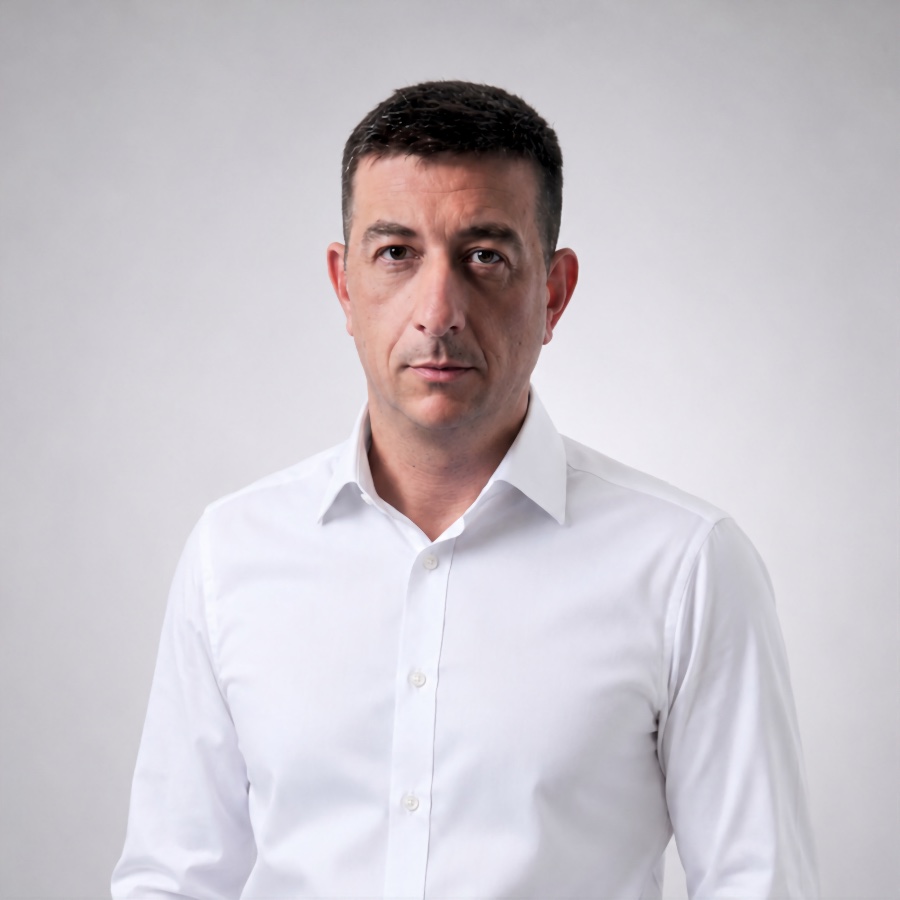
Yiannis Kourmpetis, PhD
Founder and CEO
Entrepreneur and AI x Bio x IP researcher. PhD in predictive modelling for protein and ingredient function. Two decades across R&D and patents in multinational food and nutrition.
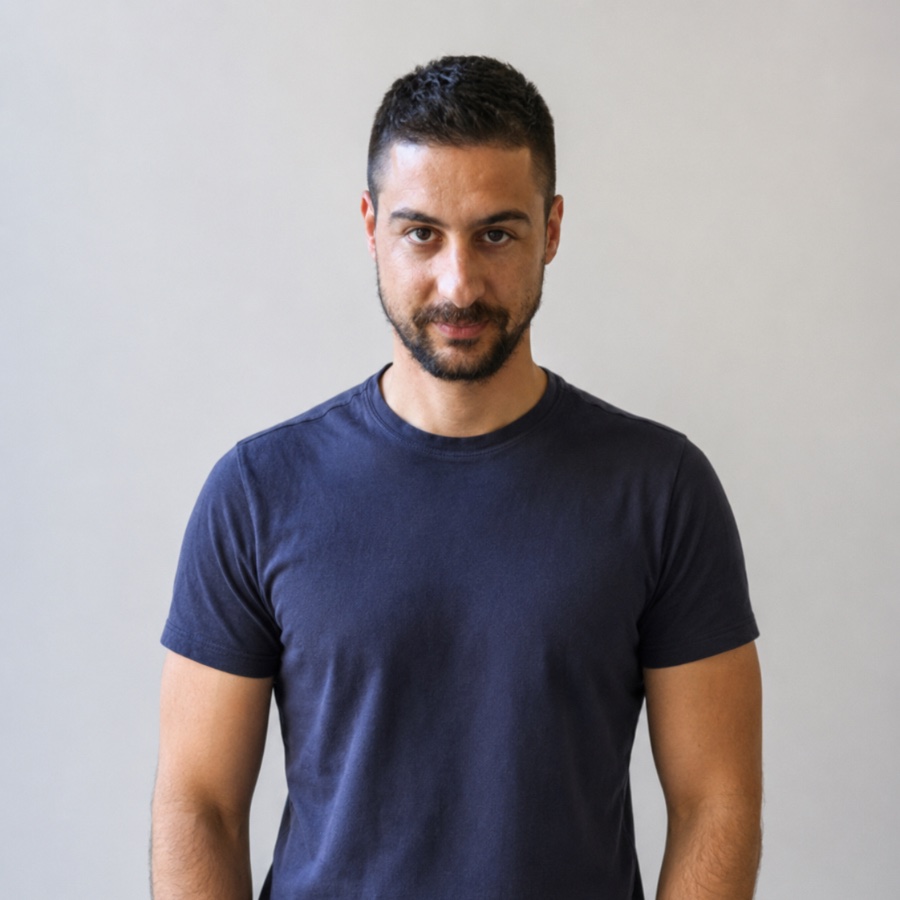
Kees Schüller, PhD
Chairman
Former Global Head of Patents at multiple nutrition and biotech groups. Qualified European and Dutch patent attorney, PhD in Molecular Biology. Thirty years in biotech, pharma and nutrition.
Vaia Sarlikioti, PhD
Innovation Strategy
Operations and Innovation strategy expert. Leads partner engagement and commercial growth. PhD in Plant Physiology and statistical modelling. Twenty years across agtech, operations and innovation.
Anastasios Gkountakos, PhD
Head of Translational Research
Biomedical scientist with over ten years of experience. Connects translational science and medicinal chemistry with AI modelling. PhD in Inflammation and Immunity, with training in Molecular Pathology & Pharmacology and expertise in biomarker discovery and validation.
Christos Goulas, MEng
Head of AI-Ops and Data Engineering
Computer Scientist. Architect of Sensi our agentic-AI based discovery platform and data infrastructure the platform runs on.
Biopôle, Lausanne
Switzerland's life-science campus.
Phenyl Building, Route de la Corniche 3A, 1066 Epalinges
A large-scale evaluation of computational protein function prediction
Radivojac et al., Nature Methods 10:221–227, 2013
The organisers' assessment of CAFA, co-authored. Supplementary Fig. 7H carries the human Biological Process ranking; Fig. 6B carries the coverage figures.
Book a focused 30-minute assessment call. Share with us the category, claim or evidence gap you would like to explore and we will share where the strongest signal is and what are the right next steps.